From Vibe to Spec Coding
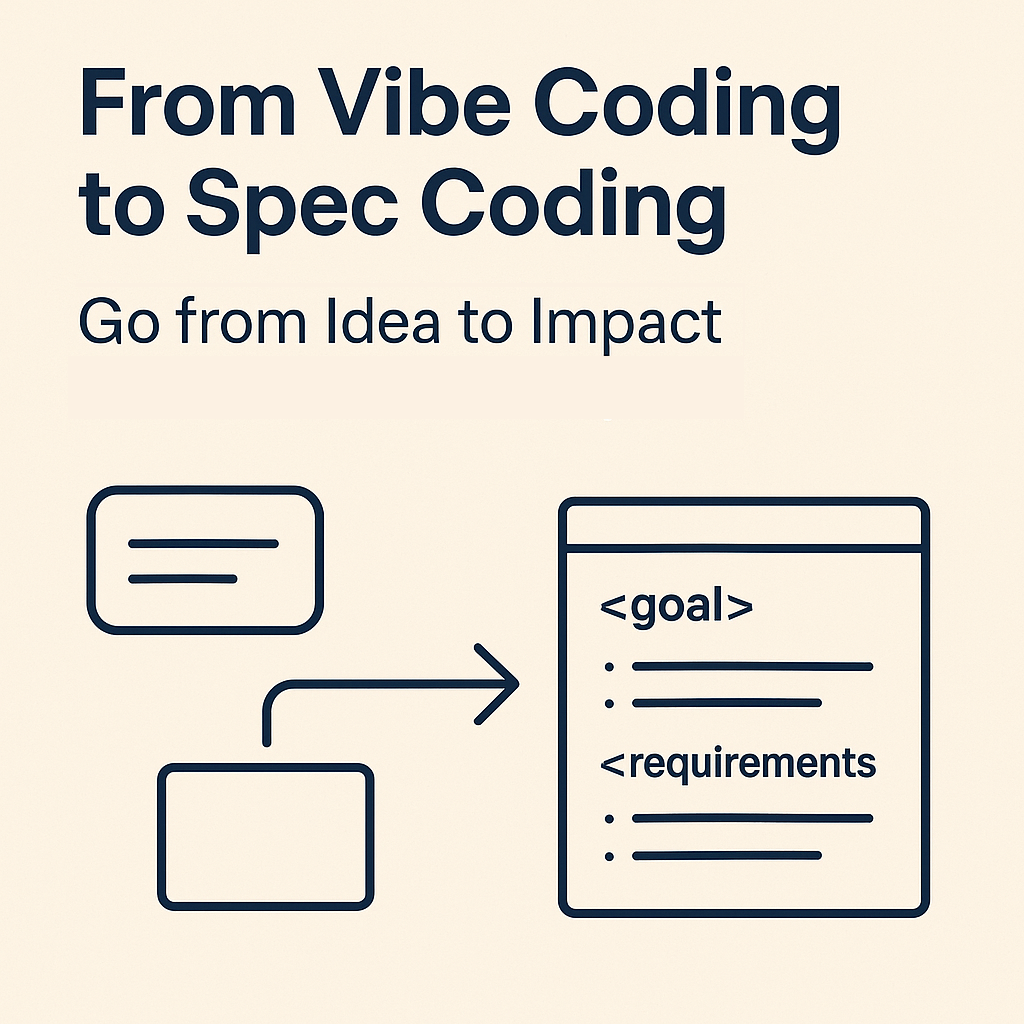
From Vibe Coding to Spec Coding:
How Prembl Helps You Go from Idea to Impact
In the age of AI-assisted software development, we’re witnessing a major shift in how we build. Gone are the days of rigid, manually-coded systems or even traditional agile sprints as the default workflow. Instead, developers are increasingly using natural language and chat interfaces to “vibe” their way into apps—one prompt at a time.
This new mode of working—vibe coding—is fun, fast, and surprisingly powerful. But as projects grow, so do the risks. That’s where a new methodology is stepping in: spec coding. And tools like Prembl.com are becoming essential in helping developers transition from one to the other, without killing the creative flow that made them start coding in the first place.
What Is Vibe Coding?
Coined by AI luminary Andrej Karpathy, vibe coding is the process of building software through casual, iterative conversations with an AI assistant. You don’t start with a fully fleshed-out design doc. Instead, you just say something like:
“Hey GPT, build me a simple to-do app in React.”
The AI responds with code. You try it. Then you go:
“Cool, now add support for dark mode. And make it sync with Firebase.”
You iterate through conversation—layering features, fixing bugs, and nudging the AI until it feels right.
There’s little planning. No architecture diagrams. No requirements doc. It’s all vibes. You’re in flow.
Vibe coding is:
- Fast and fluid
- Low-friction and beginner-friendly
- Amazing for prototyping and solo exploration
But it’s also:
- Hard to debug
- Difficult to collaborate on
- Unscalable for real-world teams or products
When you’re vibe coding, you often can’t answer questions like:
- “What’s the expected behavior here?”
- “Why was this decision made?”
- “What constraints were in place?”
- “What even is this app supposed to do?”
As soon as you need quality, consistency, or collaboration—you hit a wall.
The Rise of Spec Coding
Spec coding is the natural evolution. It’s about writing down what you want before you ask AI to build it—or at least as soon as the idea starts to solidify.
Spec coding means creating a structured plan that answers:
- What are we building?
- Why does it matter?
- What are the constraints?
- What does “done” look like?
For example, instead of just saying:
“Build me a sales dashboard”
A spec coder might write:
| |
This structured prompt gives an AI (or a teammate) the context needed to do quality work.
And when you iterate later, the spec evolves with your thinking—without losing clarity.
Vibe Coding vs. Spec Coding
| Vibe Coding | Spec Coding | |
|---|---|---|
| How it starts | “Let’s just try this and see…” | “Here’s what we’re building and why” |
| Strengths | Fast, flexible, beginner-friendly | Scalable, testable, collaborative |
| Weaknesses | Messy, hard to maintain | Requires upfront clarity & structure |
| AI Usage | Casual back-and-forth | Structured prompt → focused generation |
| Best for | Prototyping, demos, creative play | Production systems, teams, long-term apps |
These approaches aren’t enemies—they’re phases. Most great projects start with vibes… but they don’t end there.
The key is knowing when to shift gears.
Why the Shift Is Happening Now
This transition isn’t just philosophical—it’s practical. There are a few major forces driving developers from vibe to spec:
1. AI Assistants Are the New Co-Dev
Language models like GPT-4, Claude, and others are amazing at generating code. But they can’t read your mind. They need clear direction—and that means better specs.
2. Projects Are Getting Bigger
What starts as a simple widget often grows into a full product. Without a written spec, it becomes impossible to onboard new collaborators, test edge cases, or remember what “done” was supposed to mean.
3. Conversational Coding is Going Mainstream
More tools now allow for in-editor chat with AI agents. But the quality of these interactions scales with the quality of your instructions. The future belongs to developers who can prompt like pros.
How Prembl Bridges the Gap
Prembl.com is designed for this exact moment—when vibe coding has served its purpose, and it’s time to get intentional.
🧱 1. From Prompt to Spec
Prembl turns your ideas into structured, reusable specs. It helps you lay out your goals, requirements, constraints, and edge cases—without friction.
It’s like Notion or Google Docs, but optimized specifically for developers who want to prompt smarter and build cleaner.
🕰 2. Evolving Specs Over Time
Every iteration you make—every refinement to your prompt—becomes part of your spec history. No more losing track of why a change was made or what version worked best.
This makes debugging easier, onboarding faster, and handoffs smoother.
🧠 3. Built-In Prompt Patterns
Prembl gives you starter templates and best-practice patterns for common dev tasks—from building UIs to writing test plans. You don’t have to reinvent the wheel every time.
The more you use it, the more powerful your specs become.
🤖 4. Ready for AI-First Teams
Prembl specs are written to feed directly into AI coding workflows. They help you think clearly and prompt cleanly—so whether you’re working with GPT, Copilot, or custom agents, the output is more predictable and professional.
Why Specs = Better Results
When you switch from casual prompting to spec-driven workflows, you gain:
- ✅ Higher quality AI output
- ✅ Fewer bugs and misunderstandings
- ✅ Better long-term maintainability
- ✅ Clearer team communication
- ✅ Stronger test coverage and validation
Specs don’t slow you down—they keep your fast ideas from becoming fragile systems.
Final Thoughts
Vibe coding is a breakthrough. It’s fun. It’s intuitive. It’s made building software feel like jamming with an instrument.
But when you want your idea to survive beyond the prototype, it needs structure. It needs clarity.
It needs a spec.
Prembl helps you evolve from vibes to vision—without losing the magic that got you started. It’s not about killing creativity. It’s about capturing it, refining it, and turning it into something others can build on.
Your ideas deserve more than vibes.
Give them a spec.
Try Prembl.com and start writing specs that make AI work for you, not just with you.